Begin of page section:
Page sections:

  • Go to contents (Accesskey 1)
  • Go to position marker (Accesskey 2)
  • Go to main navigation (Accesskey 3)
  • Go to sub navigation (Accesskey 4)
  • Go to additional information (Accesskey 5)
  • Go to page settings (user/language) (Accesskey 8)
  • Go to search (Accesskey 9)

End of this page section. Go to overview of page sections

Begin of page section:
Page settings:

English en
Deutsch de
Search
Login

End of this page section. Go to overview of page sections

Begin of page section:
Search:

Search for details about Uni Graz
Close

End of this page section. Go to overview of page sections


Search

Begin of page section:
Main navigation:

Page navigation:

  • University

    University
    • About the University
    • Organisation
    • Faculties
    • Library
    • Working at University of Graz
    • Campus
    Developing solutions for the world of tomorrow - that is our mission. Our students and our researchers take on the great challenges of society and carry the knowledge out.
  • Research Profile

    Research Profile
    • Our Expertise
    • Research Questions
    • Research Portal
    • Promoting Research
    • Research Transfer
    • Ethics in Research
    • Commission for Scientific Integrity
    Scientific excellence and the courage to break new ground. Research at the University of Graz creates the foundations for making the future worth living.
  • Studies

    Studies
    • Prospective Students
    • Students
  • Community

    Community
    • International
    • Location
    • Research and Business
    • Alumni
    The University of Graz is a hub for international research and brings together scientists and business experts. Moreover, it fosters the exchange and cooperation in study and teaching.
  • Spotlight
Topics
  • Sustainable University
  • Researchers answer
  • Work for us
Close menu

End of this page section. Go to overview of page sections

Begin of page section:
You are here:

University of Graz Dimensions of Europe Visiting Fellowships Eirik Risberg
  • Clusters
  • Visiting Fellowships
  • Karl Kaser Explorative Research Grants
  • Research Projects
  • Study Programmes
  • About Us
  • Events
  • News

End of this page section. Go to overview of page sections

Begin of page section:
Sub navigation:

  • Clusters
  • Visiting Fellowships
  • Karl Kaser Explorative Research Grants
  • Research Projects
  • Study Programmes
  • About Us
  • Events
  • News

End of this page section. Go to overview of page sections

Eirik Risberg

Senior Fellow in the cluster "Cultural memory and cultural heritage in Europe in the context of digital transformation"

Educating for democratic citizenship in a digital age: Fostering empathy in the shadows of the violent 20th century

My project, “Educating for democratic citizenship in a digital age: Fostering empathy in the shadows of the violent 20th century,” examines the role empathy plays in our understanding of the past and, by extension, in educating future democratic citizens – in an age when our relation to the past is rapidly being transformed by digital technology.

The ability to empathise, roughly, to ‘assume the perspective of someone else,’ has long been considered fundamental to an understanding of the past. The concept, however, has proven notoriously difficult to define, and a longstanding concern in the literature is that one’s empathy may fail to materialise; that, in the case of the 20th century, it may be overpowered or eroded by the sheer volume and availability of atrocity images, leaving us numb and thus unable to relate to or understand the past.

This challenge seems particularly acute in our day and age, when digital technologies have made the access to vast troves of images from the violent 20th century readily available, and when digital reconstructions of sites of persecution, augmented reality, holograms of survivors, educational computer games and, most recently, the possibilities enabled by artificial intelligence, is fundamentally changing our relation to the past.

Some scholars, however, remain adamant that our ability to empathise is more resilient than we think – that empathy is not merely an immediate emotional response to an image or an observed situation, but more fundamentally connected to our values, self-conception and identity. On this conception, new forms of mediating the history of the 20th century may not necessarily contribute to eroding our empathy but, on the contrary, provide opportunities for new forms of engagement with our past.

The current research project addresses these and other implications of the rapid digital transformation on empathy, and the consequences this has for the widely shared aim of fostering future democratic citizens.
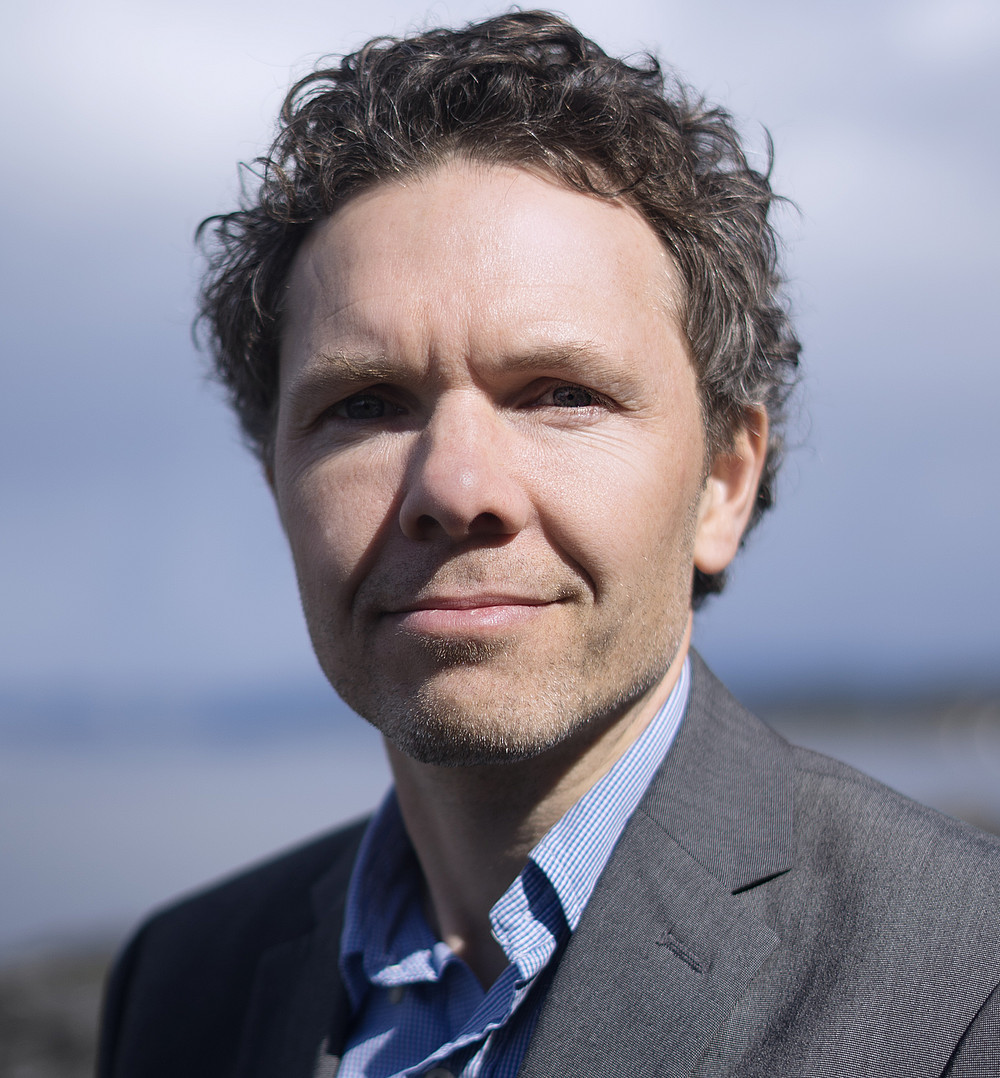
Eirik Risberg

Lunch Lecture: Educating for democratic citizenship in a digital age: Fostering empathy in the shadows of the violent 20th century

Begin of page section:
Additional information:

University of Graz
Universitaetsplatz 3
8010 Graz
Austria
  • Contact
  • Web Editors
  • Moodle
  • UNIGRAZonline
  • Imprint
  • Data Protection Declaration
  • Accessibility Declaration
Weatherstation
Uni Graz

End of this page section. Go to overview of page sections

End of this page section. Go to overview of page sections

Begin of page section:

End of this page section. Go to overview of page sections